What Does a Notary Public Do?
Updated 2026-09-19
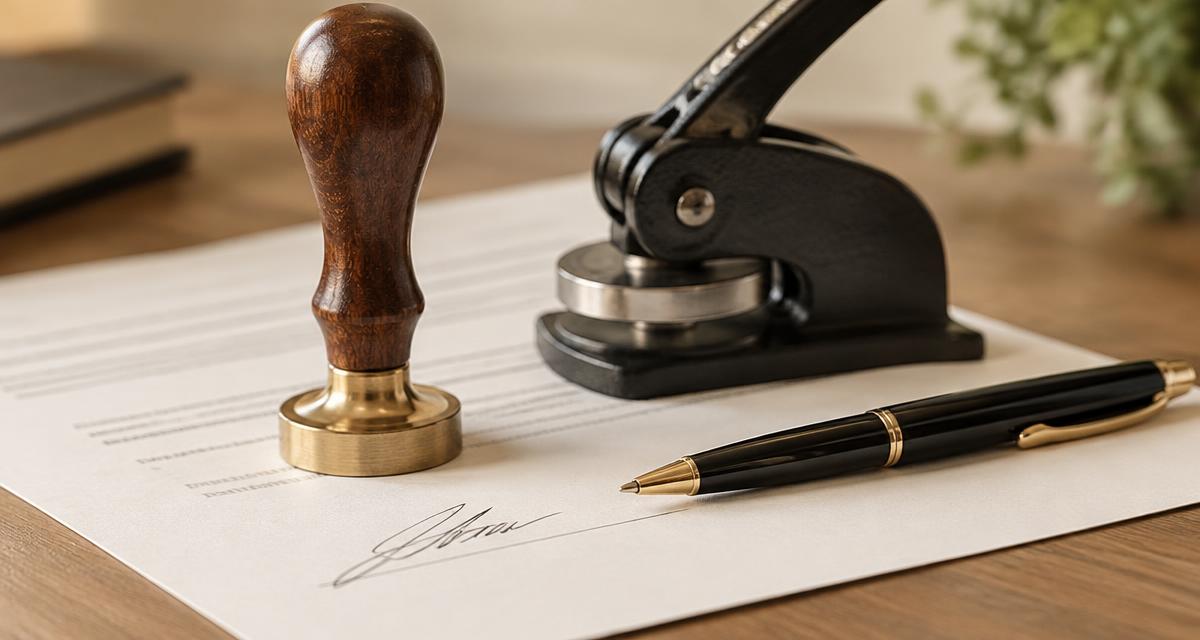
A notary public is a state-commissioned official who witnesses signings. The notary checks the signer's identity, confirms the signer appears willing and aware, watches the signature or takes the signer's acknowledgement, and completes a notarial certificate with their seal. A notary does not verify that the contents of a document are true, and cannot give legal advice.
The notary's four core jobs
- Identify the signer, usually through government-issued photo identification.
- Confirm the signer is acting willingly and appears to understand what they are signing.
- Perform the notarial act the document calls for, such as an acknowledgement or a jurat.
- Complete and sign the notarial certificate and apply their seal, and record the act where required.
Common notarial acts
An acknowledgement is used when a signer confirms that the signature on a document is theirs and was made willingly. A jurat is used when a signer swears or affirms that the contents are true and signs in front of the notary. Other acts include certifying copies, witnessing signatures and administering oaths, depending on what each state authorizes.
The document itself usually indicates which act is required through the wording of its certificate. If it does not, the person or agency receiving the document should tell you which act they need — the notary cannot choose it for you.
What a notary does not do
- Give legal advice or opinions.
- Choose or prepare a document for you, unless separately licensed to do so.
- Tell you how to complete a form or what to write.
- Explain the legal consequences of signing.
- Verify that the statements inside a document are true.
Why notarization matters
Notarization is a fraud-deterrent step. It creates a record that a named person, whose identity was checked, appeared and signed. That is why courts, government agencies, lenders and foreign authorities often require it. It does not make an otherwise invalid document valid.
Is a notary an attorney?
No. A notary commission is not a law licence. Some attorneys are also notaries, and their profiles would say so, but a notary acting as a notary cannot advise you on your document or your situation.
Frequently asked questions
- Does a notary read my document?
- A notary reviews it enough to identify the notarial certificate, check for blank spaces and confirm the act required. They do not evaluate the content.
- Can a notary notarize for a family member?
- Rules vary by state, and notaries must avoid acts where they have a personal interest. Many decline family notarizations for that reason.
- Do notaries keep records?
- Many states require a journal of notarial acts. Requirements vary by state.
- Is a notarized document legally binding?
- Notarization addresses the signing, not the enforceability of the agreement. Whether a document is binding depends on the document and the law that applies to it.
Search the notary directory
Enter your ZIP code or city to see notaries who serve your area.
Related guides
What Happens During a Notary Appointment?
A step-by-step walkthrough of a notary appointment, from identification through to the notary's seal.
Read guideWhat Do I Need to Bring to a Notary?
A checklist of what to bring to a notary appointment: the document, identification, signers, witnesses and payment.
Read guideWhy Would a Notary Refuse to Notarize a Document?
The usual reasons a notary must decline — identification, blank fields, capacity, coercion and acts outside their authority — and how to fix each one.
Read guide
Where Can I Get Something Notarized?
Banks, shipping stores, law offices, independent notaries, mobile notaries and online notaries — where to get a document notarized and which option fits your situation.
Read guideNotarization requirements vary by state and document type. A notary public generally cannot give legal advice, choose a document for you, draft a document unless separately authorized, tell you how to complete a form, or explain the legal effect of signing. If you are unsure whether your document needs notarization or which notarial act is required, ask the agency or person receiving the document, or consult a qualified legal professional.